

Quick Summary
Medical and dental offices usually need more parking than a standard office, often in the range of four to five spaces per 1,000 square feet in suburban codes, because patients come and go all day. Two separate rules apply: the local zoning minimum, which sets how many total spaces your use requires, and the ADA, which sets how many of those must be accessible. Chicago has relaxed many parking minimums, especially near transit, while suburbs tend to enforce ratios strictly, so parking can quietly decide whether a space works for your practice.
Why Listen to Us
Mike Wolson is a commercial real estate broker and an Illinois-licensed attorney, rated 4.9 across 71 Google reviews. Most brokers never check whether a space has enough parking for your patient volume or even allows your use under local zoning. As founder of +CRE, affiliated with Compass, he represents dental practices, healthcare providers, and service businesses across Chicago and its suburbs, and he treats parking and zoning as go or no-go questions before you fall in love with a space.
Why Parking Can Make or Break a Medical Space
Parking rarely makes the shortlist of things owners worry about, and then it quietly sinks a deal. A medical or dental practice runs on steady patient flow, and patients drive, especially in the suburbs. If a space does not have enough parking, two things happen: the local code may not allow your use at the intended size, and even if it does, patients circling for a spot is a daily drag on your practice. Parking is worth checking before anything else, because it is one of the few problems you usually cannot fix after you sign.
What Zoning Actually Requires
Every municipality sets its own minimum parking ratio by use, and medical and clinic uses almost always require more than a general office. In many suburban codes, medical or dental offices land around four to five spaces per 1,000 square feet of floor area, compared with roughly three to four for a standard office. The exact number varies by town, so the only reliable answer comes from the specific municipality for the specific address.
Chicago is a different picture. The city has reduced or eliminated parking minimums in many areas, particularly for locations close to transit, so a city space may carry little or no zoning parking requirement at all. That flexibility helps in the city, but it does not change the practical need: your patients still need somewhere to park. For any space, confirm both the zoning requirement and the real, usable parking before you commit, and check that your zoning actually permits a medical use at the site.
Zoning Minimums and ADA Accessible Parking Are Two Separate Requirements
This is the distinction that trips people up. They are two different rules, from two different authorities, and you have to satisfy both.
Zoning minimums are local. They set the total number of spaces your use requires, and they come from the city or village code. Fall short, and you may not get approval for your use or your size.
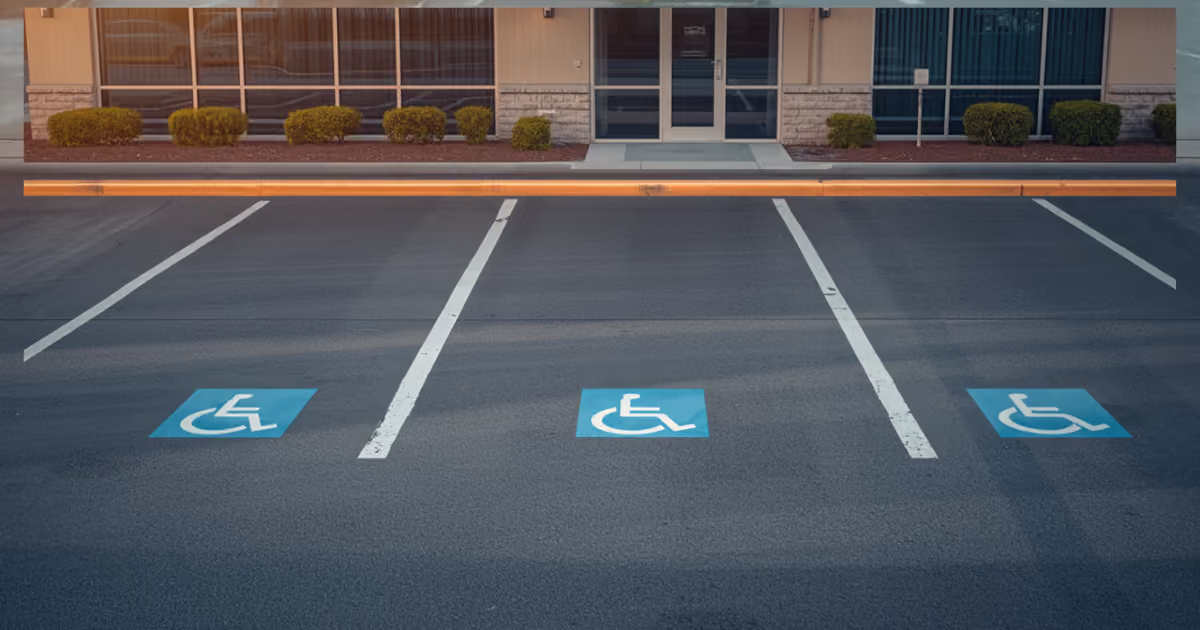
ADA accessible parking is federal. It sets how many of your total spaces must be accessible, based on the total count, plus a share that must be van-accessible. Medical uses carry extra scoping: outpatient facilities generally must make a higher percentage of patient and visitor spaces accessible than an ordinary business, and outpatient rehabilitation or physical therapy higher still.
Meeting your zoning count does not mean you have met the ADA, and vice versa. Both get checked, and the accessible spaces are part of the path of travel inspectors confirm before issuing your certificate of occupancy.
What to Check Before You Sign
A few questions settle most parking risk before it becomes your problem:
- How many spaces does the local code require for a medical use of your size at this address?
- How many usable spaces does the site actually have, and are they shared with other tenants?
- Does the lease guarantee you a certain number of spaces, or just general access to a shared lot?
- How many accessible and van-accessible spaces are required, and are they already in place?
- Does the zoning permit a medical or dental use here at all, or would it need a variance?
Getting these answers during build-out planning, or better yet before signing, keeps parking from turning into a late surprise that limits your practice.
How Plus CRE Helps
Because Mike Wolson is both a broker and an Illinois-licensed attorney, parking and zoning get checked as go or no-go questions at the start, not discovered at permitting. That means confirming the local parking ratio for your use and size, verifying real usable parking, checking the accessible-space requirements, and making sure the zoning actually allows a medical use before you commit. +CRE represents dental practices, healthcare providers, and service businesses across Chicago and the suburbs, so you never sign a lease on a space that cannot support your patients. Considering a location? Talk to us before you sign.
Frequently Asked Questions
How many parking spaces does a medical office need?
In many suburban codes, medical and dental offices need around four to five spaces per 1,000 square feet, more than a standard office. The exact ratio is set by the local municipality, so confirm it for the specific address and use.
Does Chicago require parking for a medical office?
Often less than the suburbs. Chicago has reduced or eliminated parking minimums in many areas, especially near transit, so a city space may have little or no zoning parking requirement. Your patients still need somewhere to park, so check the real availability.
What is the difference between zoning parking and ADA parking?
Zoning minimums are local rules that set your total number of spaces. ADA accessible parking is a federal rule that sets how many of those must be accessible. You have to meet both, and medical uses have extra accessible-space scoping.
Can a lack of parking stop me from opening a practice?
It can. If a site does not meet the local parking requirement for a medical use, you may not get approval at your intended size without a variance. That is why parking should be checked before you sign, not after.
Is parking usually shared in a medical building?
Often yes. Many buildings share a lot among tenants, so confirm whether your lease guarantees a set number of spaces or just general access, and whether the shared supply is enough for your patient volume.