

Quick Summary
A medical or dental build-out in Chicago usually takes four to eight months from design to opening and costs roughly 150 to 300 dollars per square foot, with complex dental, imaging, or surgical space running higher. The work moves through four stages: design and space planning, permitting, construction, and final inspections. The biggest single variable in your budget is not the finishes you pick, it is how much the landlord delivers and funds versus how much falls to you.
Why Listen to Us
Mike Wolson is a commercial real estate broker and an Illinois-licensed attorney, rated 4.9 across 71 Google reviews. Most brokers hand over the keys and move on once the lease is signed, long before the build-out starts. As founder of +CRE, affiliated with Compass, he represents dental practices, healthcare providers, and service businesses across Chicago and its suburbs, and he negotiates the build-out scope, the allowance, and the delivery condition into the lease itself, where they actually protect you.
Why the Build-Out Decides Your Opening Budget
When practice owners plan a new location, most of the attention goes to rent. Rent matters, but the build-out is usually the larger number, and it is where a weak lease costs you the most. Turning raw or second-generation space into a working dental or medical office means framing, plumbing, electrical, specialty systems, finishes, and inspections, and healthcare space carries requirements a standard office never touches.
The good news is that almost every expensive surprise in a build-out can be prevented before you sign, if you know what to look for. This guide walks through how long the work takes, how permitting plays out in Chicago and the suburbs, what it costs in 2026, and the part that trips up the most owners: who actually pays for what.
How Long a Build-Out Actually Takes
Plan for four to eight months from the day you start design to the day you see patients. For a straightforward office it can be shorter; for a dental practice with multiple operatories or any imaging or surgical use, it can run longer. The timeline breaks into four stages.
- Design and space planning (3 to 8 weeks). Your architect produces a space plan, then develops full drawings. Getting a test fit done before you sign saves time here, because you already know the space holds your room count.
- Permitting (3 to 10 weeks). The city reviews your permit set. Chicago generally takes longer than the suburbs, and an incomplete set gets sent back, which restarts the clock.
- Construction (8 to 16 weeks). Your general contractor runs the trades. Specialty dental and medical work, like operatory plumbing and extra electrical, adds time.
- Inspections and close-out (1 to 3 weeks). Final inspections, the punch list, and the certificate of occupancy before you can legally open.
The dates in your lease should reflect this reality. If your rent starts before the build-out can realistically finish, you are paying for a space you cannot use.
The Permit Process, Step by Step
Permitting is the stage owners underestimate most, because it is out of your hands once you submit. Here is how it runs.
First, your architect of record and engineers prepare the permit set, the detailed drawings that show the city your plans meet code. The completeness of that set matters more than anything: a thorough set clears review faster, while one missing mechanical or accessibility details gets kicked back for revisions.
Next, the jurisdiction reviews it. Chicago runs its own process and tends to be slower, while many suburbs move faster but each has its own quirks. Healthcare uses can trigger extra review for things like mechanical, electrical, and plumbing systems and higher occupancy loads. Once approved, you get the building permit and construction can begin.
At the end, inspectors sign off stage by stage, and the final certificate of occupancy is the last gate before you open. No certificate, no patients, so build that timing into your plans and never schedule a start date until you have a clear path to it.
What a Build-Out Costs in 2026
For 2026, budget roughly 150 to 300 dollars per square foot for a medical or dental build-out in the Chicago area, with simpler service-business offices toward the lower end and dental, imaging, or surgical space often higher. A 2,500 square foot dental office, for example, can easily run several hundred thousand dollars once operatories, sterilization, specialty plumbing, and equipment hookups are included.
The cost drivers that matter most are the ones you cannot see on a tour: the MEP systems, the HVAC capacity, and the condition the space is delivered in. A suite that already has strong electrical, plumbing stubbed in, and adequate cooling from a prior medical tenant can be dramatically cheaper to finish than a bare office at the same rent.
Two numbers protect you here. Keep a contingency of ten to fifteen percent for the change orders that come up in every project, and get a real contractor estimate on a specific space before you sign, not a per-foot guess afterward.
Landlord Work, Tenant Work, and the TI Allowance Are Three Different Things
This is where most owners get surprised, because these three things get blurred together and they are not the same.
Landlord work vs. tenant work is the split of who builds and pays for what, usually written into a work letter. The landlord might deliver base systems and a demising wall; you handle the interior specific to your practice. See landlord work vs. tenant work.
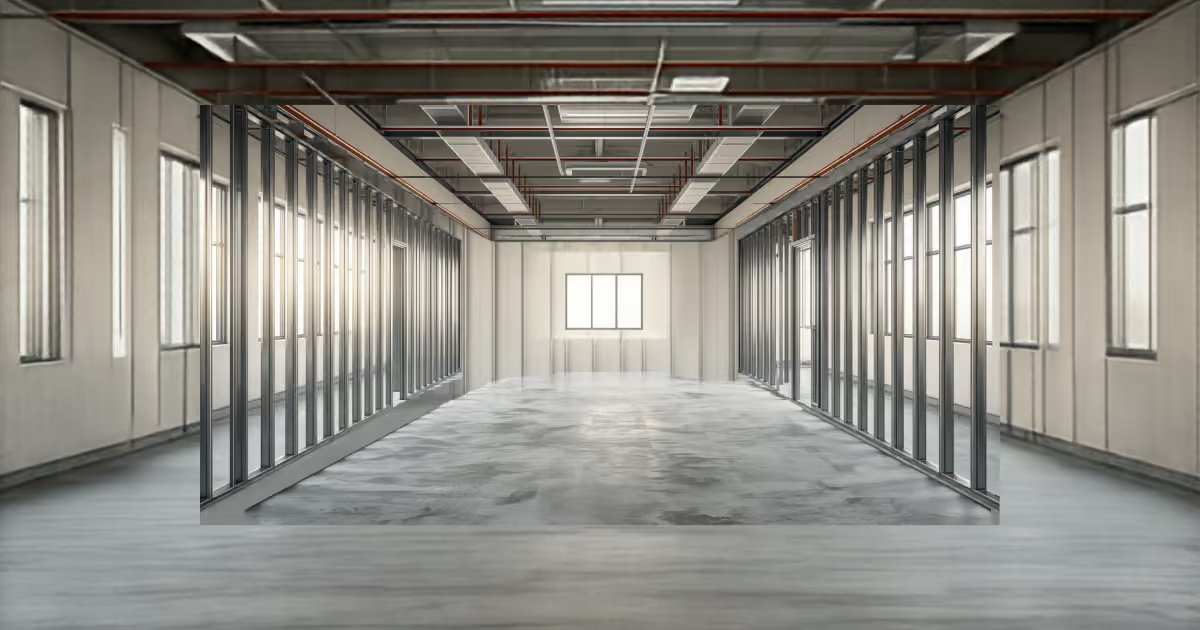
Delivery condition is the exact state the landlord hands you the space in, before any of your work starts. A vague as-is clause can leave you inheriting an old HVAC unit or insufficient power. See delivery condition.
The TI allowance is money the landlord contributes toward your build-out, and how it is paid out, the TI drawdown, decides how much of your own cash you float during construction.
Each of these is negotiated separately, and each one moves real money. Treating them as one line item is how owners end up covering six figures they assumed were the landlord's job.
How Plus CRE Helps
Because Mike Wolson is both a broker and an Illinois-licensed attorney, he negotiates the build-out into the lease rather than leaving it to chance after you sign. That means a clear delivery condition, a detailed work letter, a TI drawdown schedule that does not drain your cash, and a fixturing period that actually covers your construction time so you are not paying rent on a space you cannot use. +CRE represents dental practices, healthcare providers, and service businesses across Chicago and the suburbs, and the goal is simple: no expensive surprises once the walls come down. If you are planning a new space or a move, talk to us before you sign.
Frequently Asked Questions
How long does a dental office build-out take in Chicago?
Plan for about four to eight months from design to opening, sometimes longer for a larger practice or imaging and surgical space. That covers design, permitting, construction, and final inspections. Chicago permitting usually takes longer than the suburbs.
How much does it cost to build out a medical or dental office?
In 2026, budget roughly 150 to 300 dollars per square foot in the Chicago area, with dental, imaging, and surgical space often higher. The condition the space is delivered in and the existing MEP systems are the biggest cost swings.
Do I need a permit to build out medical office space?
Yes. Your architect prepares a permit set, the city reviews it, and construction cannot start until the permit is issued. At the end, you need a certificate of occupancy before you can legally open.
Who pays for the build-out, me or the landlord?
It depends on what you negotiate. The work letter splits landlord work and tenant work, the delivery condition sets what the landlord hands you, and the TI allowance is money the landlord contributes. All three are negotiable and should be settled before you sign.
What is the most common reason a build-out goes over budget?
Change orders. Mid-project additions and surprises add up fast, so lock down your scope and equipment list before construction starts and keep a contingency of ten to fifteen percent.