


Why Most Location Advice Misses the Mark
Walk into any dental practice seminar and they'll tell you to "analyze demographics" and "evaluate competition." They're not wrong, but they're missing the nuances that separate a great location from a mediocre one.
My dual background as a broker and attorney gives me a unique perspective. I evaluate properties both for their business potential and their legal implications. Here's what actually drives site selection success.
THE THREE CRITICAL FACTORS
FACTOR 1: Demographics
Everyone says: "Target high-income areas."
What actually matters: Income distribution, not just median income.
Naperville and Downers Grove both have median household incomes around $120K. But Naperville has more households earning $200K+ who'll pay for cosmetic dentistry, implants, and comprehensive treatment. That difference drives revenue.
What to analyze:
Income Breakdown:
- Percentage earning $150K+ (comprehensive treatment acceptance)
- Percentage earning $75-150K (PPO bread-and-butter patients)
- Mix of commercial insurance vs. self-pay capacity
Age & Housing:
- Young families = pediatric opportunity
- 45-65 demographic = crown and bridge, implants
- New construction = new patients moving in
- Established neighborhoods = stable base
Real Example:
Two Wheaton sites: Site A in an established neighborhood with aging population. Site B near 200+ new homes under construction.
Site B is better long-term. Within 18 months, a practice there would attract 400+ new patient families moving from out of state with no existing dental relationships.
FACTOR 2: Competition (Quality Matters More Than Quantity)
Everyone says: "Avoid oversaturated markets."
Focus on this instead: Competition quality, not just count.
There are six dental practices near a high performing Naperville site. Four don't accept new patients. Two have 2.8-star Google reviews. A practice that opened there with modern amenities and good service was booked solid in six months.
How to Evaluate Competitors:
Check Their Online Presence:
- Google rating below 4.0 = opportunity for you
- Outdated website = they're not marketing
- No online booking = they're behind
Check Their Operations:
- Accepting new patients?
- Evening/weekend hours?
- Modern technology (CEREC, digital x-rays)?
- Long wait times for appointments?
Identify the Gap:
Highland Park has five established practices. All close early with limited weekend hours, and 2-3 week waits. A practice offering regular evening hours and same week availability would fill an obvious gap.
The "Good Competition" Principle:
Multiple dental practices in an area signal sufficient demand. Better to open where 3-4 competitors prove the market works than be the only dentist where patients aren't accustomed to going for care.
FACTOR 3: Accessibility (The Most Underrated Factor)
Everyone says: "Been on the road with the highest traffic count."
What actually matters: Convenience to daily patterns.
Patients choose dentists based on proximity to home and work commute routes
The Three Types of Accessibility:
1. Residential Proximity
- Most patients want 10-15 minutes from home
- Map your 5, 10, and 15-minute drive radii
- Red flag: Sites requiring freeway driving
2. "On the Way Home" Positioning
- Best locations = between residential and employment centers
- Example: Route 59 in Naperville (patients commute east, practices are literally on the way home)
- Compare: Practice in residential subdivision = special trip = friction
3. Parking & Physical Access
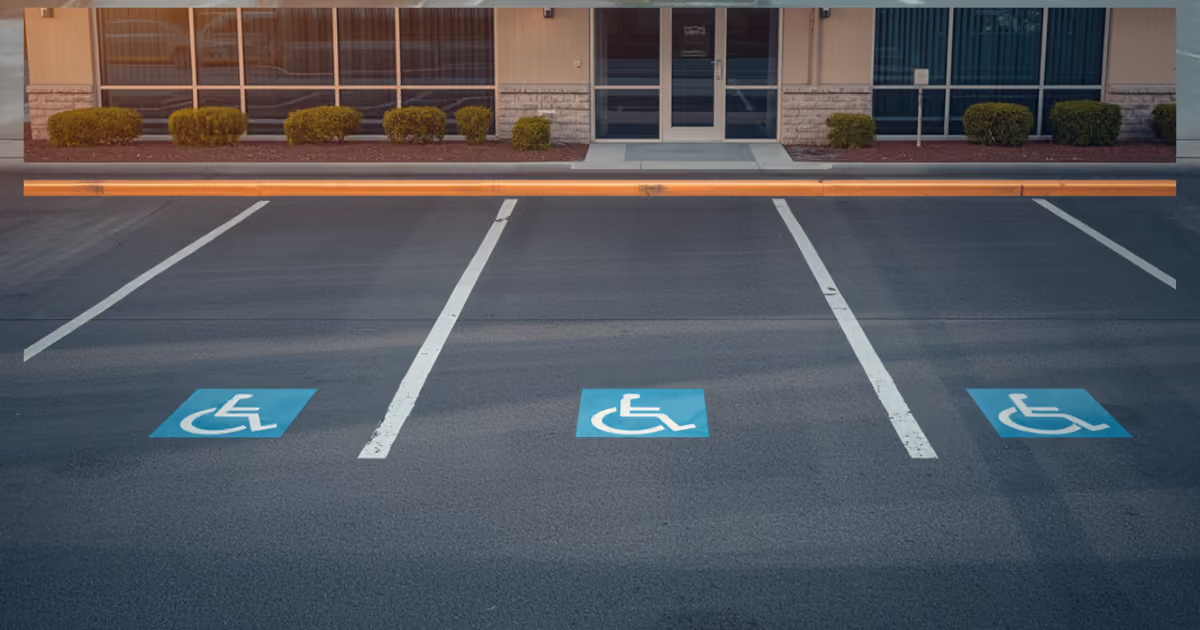
- Minimum: 1 space per 200 SF (10-12 for 2,000 SF practice)
- Better: 1 space per 150 SF (13-15 spaces)
- Ideal: Dedicated parking near entrance, ground floor, easy rush-hour access
Red Flag: Beautiful space, terrible parking. Patient experience suffers no matter how good the dentistry.
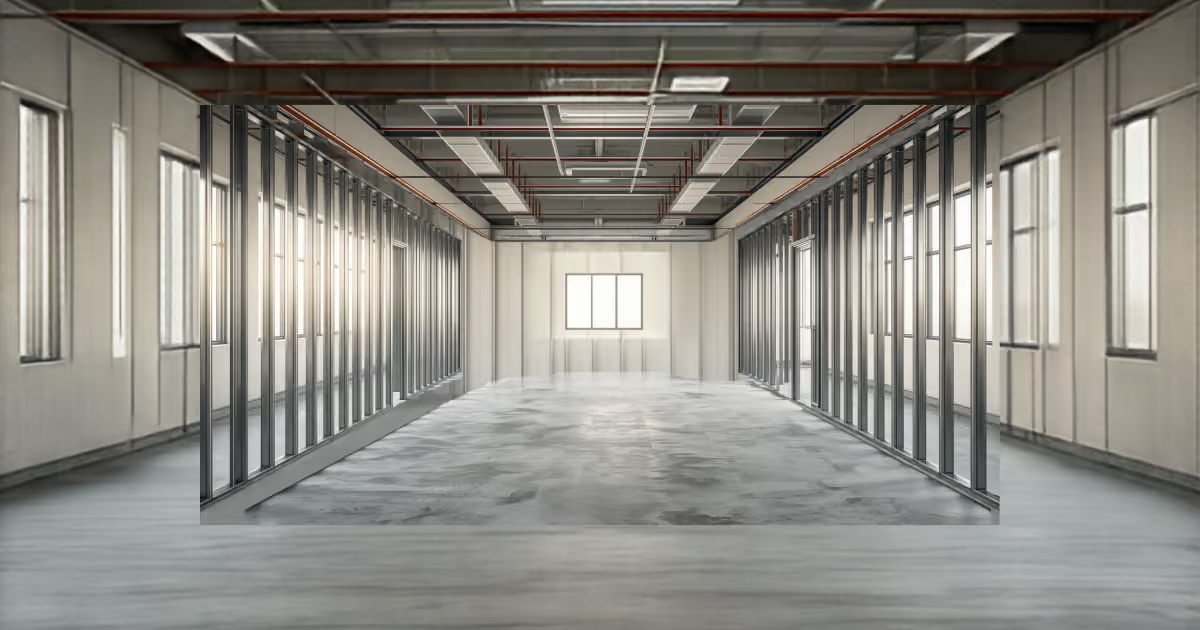
THE HIDDEN FACTOR: Buildout Feasibility
This kills deals after you've already committed:
Plumbing: You need 3-4 wet waste lines per operatory. If you're 100+ feet from the main plumbing stack, expect $40-60K in extra costs.
Electrical: Dental needs 200-amp minimum. Upgrading from 100-amp can cost $30K+ and requires utility company involvement (delays).
HVAC: Operatories need specific air changes, zoning, temperature control. Older systems may need $25-75K in upgrades.
Questions to Ask Before Touring:
- Has this building housed dental before?
- What's the plumbing/electrical situation?
- Any known buildout limitations?
Don't fall in love with a space only to discover it's unbuildable within your TI allowance.
REAL CASE STUDY: Naperville vs. Wheaton
The Decision:
Two sites for a satellite dental location:
Naperville:
- $42/SF all-in rent
- $11K buildout gap (after TI)
- Year 1 total: $103K
- Strong demographics, major corridor
Wheaton:
- $34/SF all-in rent
- $65K buildout gap (after TI)
- Year 1 total: $133K
- Good demographics, near Metra
The Math:
Over 10 years, Wheaton was $188K cheaper in rent.
The Choice: Naperville
Why?
Revenue potential. Naperville's demographics and Route 59 corridor location meant:
- 20% higher production per patient (conservative)
- Stronger new patient flow
- Better insurance mix
If Naperville generated just $50K more annually (very conservative), the higher rent paid for itself. The actual result: significantly outperforming projections.
The Lesson: Don't optimize for lowest rent. Optimize for best revenue potential relative to total costs.
THE THREE BIGGEST MISTAKES
Mistake #1: Choosing Based on Rent Alone
A space $5/SF cheaper that needs $50K more buildout isn't cheaper, it's more expensive Year 1 and potentially Years 2-3.
Total occupancy cost matters:
- Base rent + CAM/NNN
- Buildout gap (what TI doesn't cover)
- Revenue potential (does location drive patients?)
Mistake #2: Ignoring Buildout Feasibility
Signing a lease, then discovering plumbing costs $60K more than expected or electrical requires 6-month utility involvement. By then you're committed.
Evaluate buildout before you commit, not after.
Mistake #3: Underestimating Accessibility
Beautiful space, great rent, terrible parking, off the main route. Patients vote with their feet.
Convenience to daily patterns drives patient acquisition more than freeway visibility or lowest rent.