


Across the Chicago suburbs, healthcare providers are competing for a shrinking pool of available commercial space. Dental practices, medical groups, med spas, and specialty clinics are all looking at the same short list of available suites. But the challenge is not just finding a vacant space. It is what happens after you find one.
The majority of available retail and office space in markets like Schaumburg, Naperville, Arlington Heights, and Glenview was built for general commercial use. Converting it into a functional, code-compliant healthcare environment requires significant investment that many tenants underestimate when they start their search. Understanding these costs before you sign a lease is not optional. It is essential.
Why Retail Space Is Not Ready for Healthcare
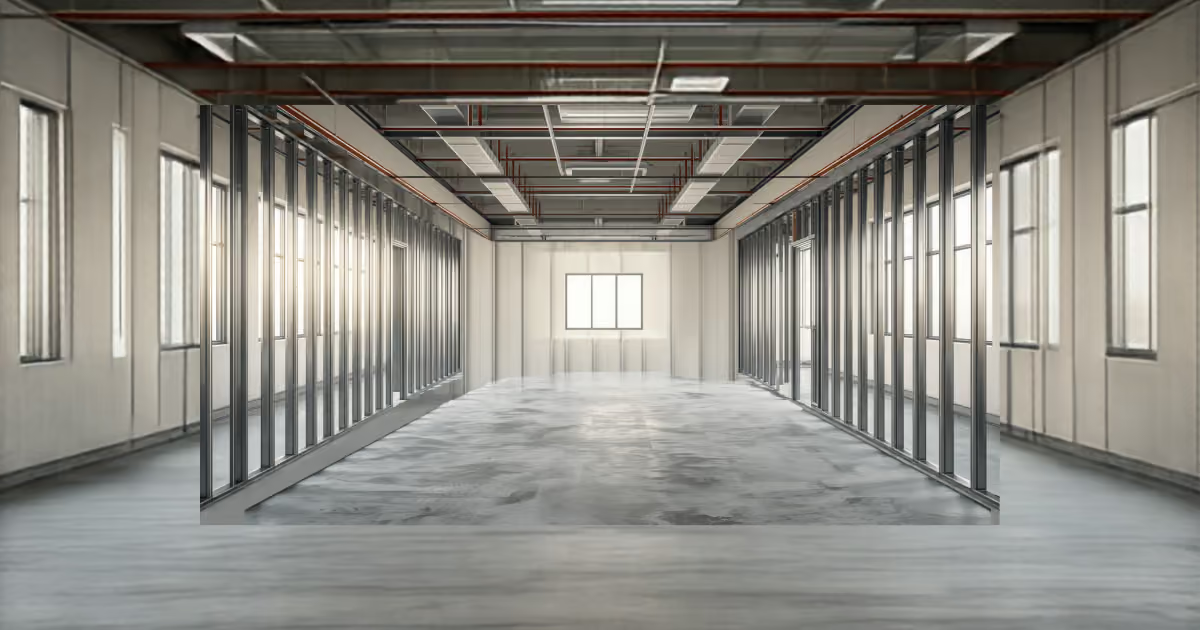
On the surface, a vacant inline retail space or a former bank branch might look like a workable fit. The square footage checks out. The location is strong. The rent is reasonable. But healthcare is one of the most demanding use categories in commercial real estate, with requirements that a standard retail buildout simply does not address.
Medical and dental tenants need higher electrical capacity, specialized plumbing, reinforced flooring, enhanced HVAC with appropriate air exchange rates, and layouts designed around both patient flow and clinical workflow. None of those come standard in a typical retail shell.
Where Conversion Costs Concentrate
Every space is different, but conversion costs in the Chicago suburban market tend to concentrate in five categories. Each one deserves attention before you commit to a space.
HVAC and Ventilation
Healthcare environments require precise temperature control and air exchange standards that standard HVAC systems cannot meet. Dental offices need suction lines and compressor hookups. Medical practices may need negative pressure rooms. Upgrading or replacing an existing HVAC system to meet these standards is often the single largest line item in a healthcare conversion, and one of the most commonly overlooked during initial site tours.
Plumbing
Adding clinical sinks, dental unit connections, sterilization areas, or even basic utility sinks beyond what retail plumbing accommodates requires opening floors and walls. If the space sits on an upper floor, or the existing plumbing infrastructure does not support the number of fixtures you need, costs escalate quickly. In older suburban strip centers throughout Cook, DuPage, and Lake Counties, the plumbing infrastructure itself may need updating before your work even begins.
Electrical Upgrades
Medical equipment places significant demands on electrical systems. Imaging machines, dental chairs, sterilizers, and treatment units all require dedicated circuits and panel capacity that retail spaces rarely carry. Panel upgrades, dedicated circuits, and emergency power provisions can add tens of thousands of dollars to a buildout that would otherwise look straightforward on paper.
ADA Compliance and Accessibility
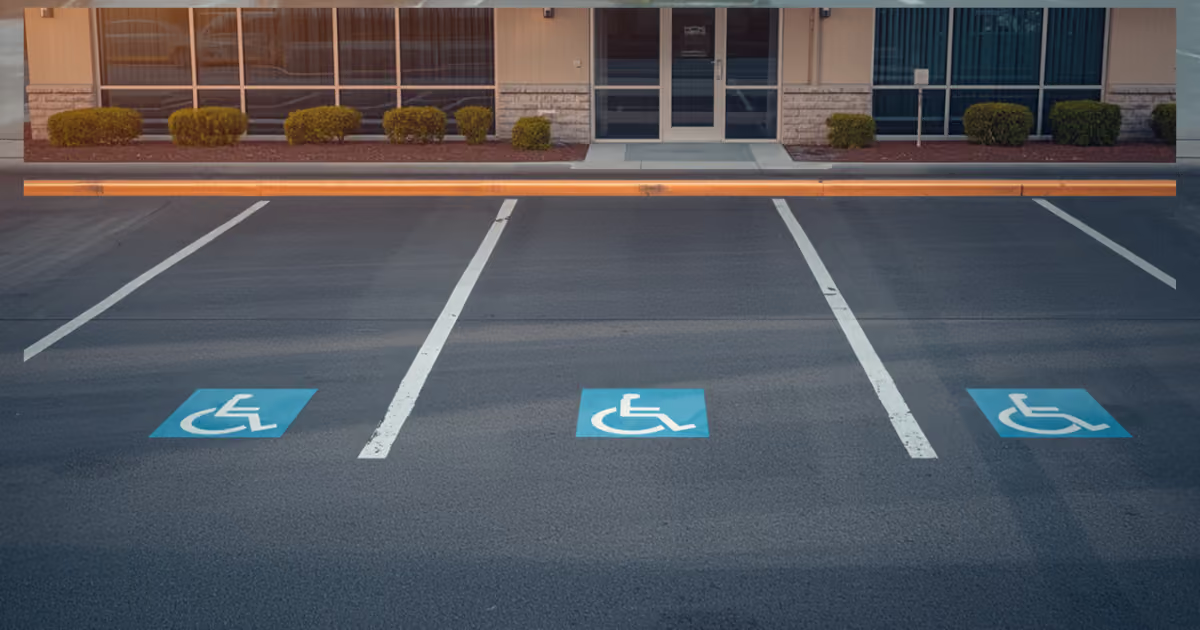
Healthcare facilities face heightened ADA compliance requirements. Restrooms, doorway widths, exam room layouts, and patient circulation paths must all meet accessibility standards. In older retail spaces that have not been recently renovated, bringing these elements into compliance can trigger significant structural changes. Once you pull a permit for a major renovation, you may be required to bring the entire space up to current code, not just the areas you are actively improving.
Permitting, Inspections, and Timeline
Healthcare buildouts require approvals from multiple agencies including local building departments, fire marshals, and in some cases state health departments. In the Chicago suburban market, permitting timelines for healthcare conversions can run three to six months or longer depending on the municipality and scope of work. Every month of delay is a month of rent paid without revenue coming in.
City of Chicago vs. the Suburbs: What Changes
If you are considering space within the City of Chicago rather than the suburbs, labor costs require separate attention. Chicago falls under prevailing wage requirements and, depending on the project scope and building trades involved, union labor rules can apply. This can meaningfully increase construction costs compared to suburban markets in DuPage, Lake, Kane, or Will Counties, where non-union contractors are common and competitive bidding tends to keep buildout costs lower.
Even within the suburbs, there are differences worth knowing. Some Cook County municipalities have adopted stricter inspection protocols and longer permitting queues than their collar county counterparts. Municipalities like Oak Brook and Naperville tend to move faster through the permitting process than some inner-ring Cook County suburbs. When you are comparing two otherwise similar spaces, the municipality alone can shift your project timeline by several months.
What This Means for Lease Negotiations
These realities have direct implications for how healthcare tenants should approach a lease. Tenant Improvement allowances, the money a landlord contributes toward buildout costs, are more critical in healthcare deals than in almost any other category.
In the current suburban Chicago market, TI allowances that might cover a full retail buildout often fall well short of what a healthcare conversion actually requires. Experienced tenants and their brokers negotiate not just for higher TI dollars, but for rent abatement periods during construction, clear definitions of what is landlord work versus tenant responsibility, and protections if the buildout runs long.
A lease that looks competitive on the rent line can become an expensive problem if the TI package does not reflect the true cost of the work required.
Medical-Ready Space: Why It Moves Fast
One consequence of these conversion costs is that genuinely medical-ready space commands a significant premium when it is available at all. Spaces with adequate plumbing already in place, upgraded electrical capacity, clinical-grade HVAC, and prior healthcare use are rare in the suburban market. When they surface, they move.
Healthcare providers who find a move-in-ready or near-ready medical suite often act quickly, sometimes skipping due diligence they would conduct under normal circumstances. That urgency can be costly. Understanding the full picture of conversion costs before you are under pressure to commit is what allows you to evaluate every option clearly, whether it is a turnkey medical suite or a raw retail shell with potential.
The Bottom Line
Converting retail space for healthcare use is absolutely achievable. Many of the best medical and dental offices across the Chicago suburbs started as standard commercial spaces. But the gap between available and ready for clinical use is almost always larger and more expensive than it first appears.
Healthcare providers searching for space in markets like Schaumburg, Barrington, Vernon Hills, Evanston or the western suburbs deserve a broker who understands these costs in detail, not just in concept. Someone who can walk a floor plan, identify the issues before they become surprises, and negotiate a lease structure that accounts for the real economics of the buildout.
That is the difference between finding a space and finding the right space.