



Commercial real estate for healthcare, dental, and service-based businesses isn't just a space decision. It's a business decision that affects patient flow, staff retention, operational costs, and long-term growth. Getting it wrong can cost you years.
At +CRE, we help business owners in Chicago and the surrounding suburbs make that decision with more clarity — and less pressure. Here's how we work →
What does a commercial real estate advisor actually do?
A commercial real estate advisor is not the same as a listing agent.
A listing agent represents the landlord — their job is to fill vacancies. An advisor represents you, the business owner, and their job is to make sure the space you choose actually supports your business.
That means more than finding available square footage. Our tenant representation process includes:
- Identifying the right trade area for your patient or client base
- Evaluating your operational needs — not just today, but 5 to 10 years from now
- Comparing multiple locations side by side, on your terms
- Reviewing lease structure to uncover hidden costs
- Assessing future flexibility — can you expand in place, or will you be forced to relocate?
- Helping you decide whether leasing or buying makes more sense for your situation
For most healthcare and dental operators, this is the difference between a location that works and one that creates friction every day.
Why healthcare and dental businesses need specialized real estate representation
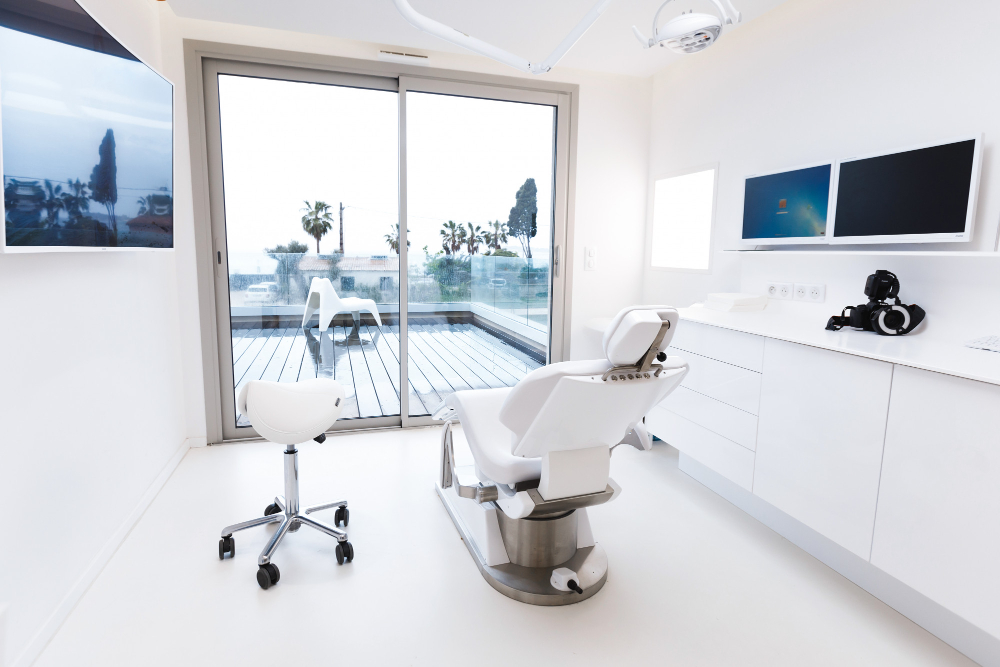
Not every business evaluates space the same way — and healthcare and dental operators are a clear example.
A dental practice isn't just looking for square footage. You need:
- Strong local demographics within your target draw area
- Adequate plumbing capacity for operatories
- Parking that's easy for patients — especially elderly ones
- Enough room to add chairs as the practice grows
- Zoning and build-out conditions that support clinical operations
A healthcare provider has a different set of priorities: ADA accessibility, proximity to referral sources, co-tenancy considerations, and sometimes regulatory layout requirements that affect which buildings even qualify.
A service-based business — whether it's a med spa, PT or chiropractic practice, or specialty service operator — might prioritize signage visibility, foot traffic, delivery access, or patient ease of parking.
The point is: a generic commercial real estate search will find you generic options. Specialized representation finds you the right one.
What is tenant representation — and why does it matter who represents you?
Tenant representation means having an advisor who works exclusively for you — not for the landlord, not for the building owner, and not for whoever is trying to fill a vacancy.
This matters because commercial leases are written to favor landlords by default. Without someone on your side who understands the language, the market, and the negotiation levers, you can easily end up with:
- A base rent that's above market
- No tenant improvement allowance — or one that's too small to build out properly
- A renewal option that gives the landlord too much control over your future costs
- Personal guarantee terms that expose more than they should
- Expense pass-throughs that inflate your effective rent significantly
Good lease negotiation doesn't just find you a space. It secures the terms that make the space financially sustainable over the full length of the lease.
If this is your first time navigating a commercial lease, we also work specifically with first-time tenants — translating the jargon and protecting you from the most common and expensive mistakes.
Should I lease or buy commercial space for my practice?
This is one of the most common questions we hear — and the honest answer is: it depends.
Leasing makes more sense when:
- You're in an early or growth stage and need flexibility
- Capital is better deployed into the business than into real estate
- You're not certain about your long-term footprint or location
- Market conditions favor tenants and give you more negotiating room
Buying makes more sense when:
- You have multi-year stability and a clear long-term location strategy
- You want to build equity instead of paying rent indefinitely
- Your operational needs are specific enough that owning gives you control over the building
- Financing conditions are favorable and ownership aligns with your broader financial plan
For owner-occupiers — especially dental and healthcare operators who plan to stay in a location for 10 or more years — buyer representation can help you evaluate whether ownership creates real long-term value. But it is not the right move for everyone, and timing matters.
The goal of real estate advisory is to help you evaluate both paths honestly, based on your actual situation — not push you toward a transaction.
Why Chicago and the suburbs require local market knowledge
Chicago is not one market. The commercial real estate conditions in the urban core are completely different from what you will find in Naperville, Schaumburg, or the North Shore.
Suburban locations often come with different expectations around parking, signage, and buildout — and different landlord dynamics. A healthcare operator opening in the western suburbs is solving for very different variables than one targeting a mixed-use corridor closer to the city.
Local advisory matters because:
- Demographics vary significantly by submarket. A trade area analysis in one suburb might show strong patient density; a few miles away, the numbers change entirely.
- Landlord expectations differ. What is standard in one market — tenant improvement allowances, lease length, exclusivity clauses — may not be negotiable in another.
- Growth patterns shape your options. Areas with active development create different opportunities than established corridors where vacancy is low.
- Accessibility and parking norms are not uniform. What works in a walkable urban neighborhood will not work for a dental practice where most patients drive from surrounding zip codes.
Understanding these nuances is not something you get from a national listing database. It comes from working in these specific markets over time.
What does the site selection process actually look like?
A good site selection process starts before you ever tour a property.
It begins with understanding what your business actually needs — not just the obvious items like size and price, but the operational factors that determine whether a location will support growth or create friction over time.
Trade area analysis. Where are your patients or clients coming from? What demographics do you need? Is there enough population density and the right income profile to support your model?
Competitive mapping. Who else is operating in the area? Are you entering a saturated market, or is there a real gap?
Operational requirements. What does your build-out actually require? Plumbing, power, HVAC load, ceiling height, zoning — these are not afterthoughts, they are filters.
Lease comparisons. Once you have identified candidates, comparing them is not just about rent. It is about total occupancy cost, term flexibility, and landlord quality over the length of your stay.
Only after working through these factors does it make sense to start touring. By that point, you are not walking into spaces blind — you are evaluating them against a clear, business-specific set of criteria.
Common real estate mistakes healthcare and dental businesses make
Even experienced operators make these:
1. Signing under time pressure. Urgency is the landlord's best tool. If you feel rushed, slow down — a bad lease lasts years.
2. Underestimating build-out costs. A tenant improvement allowance sounds generous until your contractor quotes the actual scope. Always model the gap between the allowance and the real cost.
3. Not planning for growth. The space that fits your practice today may not fit it in three years. If you're planning to open additional locations, multi-location strategy should inform your real estate decisions from the start.
4. Ignoring renewal terms. A lease with no favorable renewal option can force you to relocate just as your location becomes established — handing the leverage back to the landlord at exactly the wrong moment.
5. Focusing only on base rent. Operating expenses, CAM charges, insurance contributions, and tax pass-throughs can add 20 to 40 percent on top of base rent in some leases. Total occupancy cost is what matters.
Have more questions about the process? Our FQs cover the most common situations we see.
Working with +CRE
At +CRE, the focus is on one thing: helping healthcare, dental, and service-based businesses in Chicago and the surrounding suburbs make better commercial real estate decisions.
That means tenant representation without landlord conflicts, advisory without sales pressure, and strategy built around your business — not around closing a deal.
Whether you are opening a first location, renewing a lease, planning an expansion, or evaluating a purchase, the right process starts with understanding what your business actually needs.
If you are making a commercial real estate decision in the next 6 to 12 months, start a conversation before you sign anything.
+CRE | Mike Wolson Commercial Real Estate — Tenant and owner-occupied advisory for healthcare, dental, and service-based businesses across Chicago and surrounding suburbs.